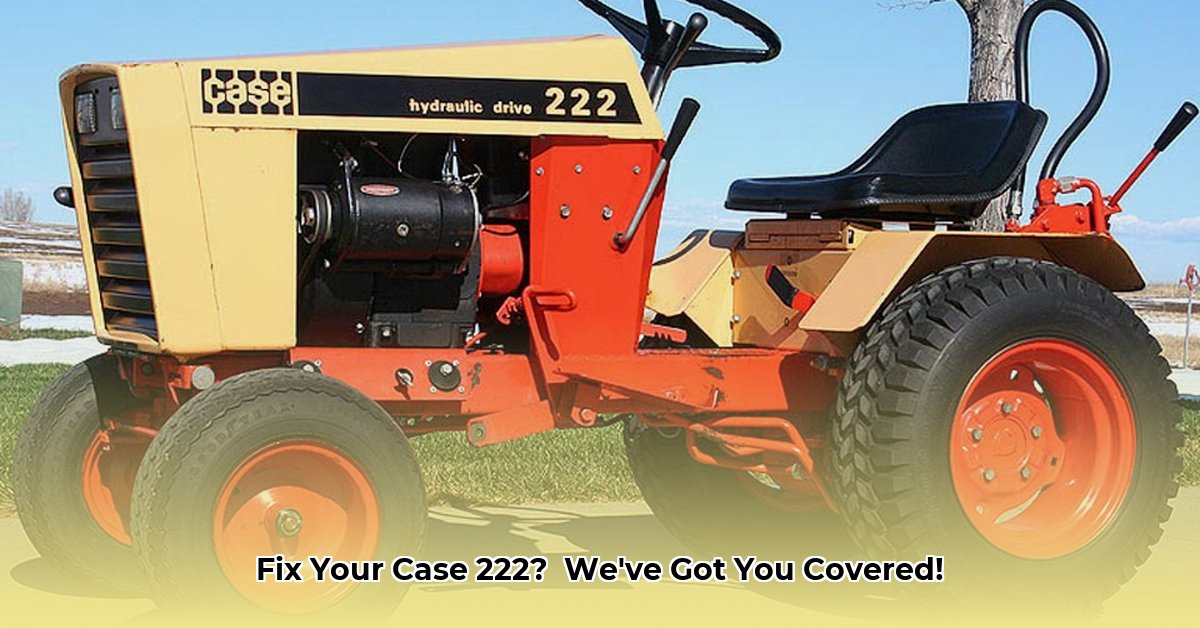
Case 222 Garden Tractor: A Timeless Classic
The J.I. Case 222 garden tractor, produced from 1969 to 1988 in Winneconne, Wisconsin, represents a golden age of robust, simple engineering. More than just a machine, it's a piece of Americana, cherished by collectors, restorers, and enthusiasts alike. This guide provides a comprehensive resource for owners looking to maintain, repair, or fully restore their Case 222, blending historical context with practical, step-by-step instructions. Whether you're a seasoned mechanic or a novice, this guide will help you understand and appreciate this iconic machine. Did you know that the Case 222's simple, yet effective design made it a popular choice for both home and small-scale agricultural use? For even more information, check out this helpful resource: Case 222 info.
Understanding Your Case 222: Deciphering the Serial Number
Before you begin any restoration work, understanding your specific Case 222 model is paramount. These tractors, manufactured over nearly two decades, underwent subtle yet significant design changes. The key to unlocking your tractor's history and sourcing the correct parts lies in its serial number. Think of it as your tractor's unique identification. Online forums, such as the Garden Tractor Talk forum 1, are invaluable resources for connecting with fellow enthusiasts and deciphering specific model details. This community support is crucial, especially when sourcing hard-to-find parts.
Technical Specifications and Features: A Deep Dive
The Case 222 boasts a robust design, featuring components that, while simple, were engineered for durability. Let’s examine some key features:
| Component | Typical Specifications | Potential Issues & Considerations |
|---|---|---|
| Engine | Often a Kohler K301AS, typically 12hp (horsepower) | Regular oil changes (using the correct weight and type – check your manual!), air filter replacements, and spark plug checks are crucial. Carburetor issues are common. Consider a rebuild kit or replacement. |
| Transmission | Hydraulic drive, variable speed | Inspect hydraulic fluid levels regularly. Leaks and unusual noises indicate potential problems requiring prompt attention. |
| Brakes | Band brakes | Regular inspection is vital. Worn brake bands need immediate replacement to ensure safety. |
| Steering | Manual (no power steering) | Expect some physical exertion; power steering was not a standard feature on these classic tractors. |
| Attachments | Mower decks, snow blowers, tillers, and more | Availability varies. Sourcing attachments may require research; online marketplaces and enthusiast networks are invaluable. |
| Approximate Weight | Approximately 715 lbs (This can vary slightly) | This weight significantly impacts transportation and handling during restoration. |
Sourcing Parts: The Case 222 Parts Hunt
Acquiring parts for your Case 222 is often the most challenging aspect of restoration. Online auction sites (eBay, etc.), classic tractor dealerships specializing in vintage equipment, and dedicated Case forums are your best allies. The Case 222 community is remarkably supportive—engaging with fellow enthusiasts will often yield surprising results. Did you know that many parts can be remanufactured or rebuilt, extending the life of your tractor and lowering costs?
Preventative Maintenance: Keeping Your Case 222 Running Smoothly
Preventative maintenance is key to extending the lifespan of your Case 222. Regular inspections are vital. Consider it a health checkup for your trusty machine.
- Engine Care: Regular oil changes (using the specified oil type and weight from your owner's manual!), clean air filters, and spark plug checks are fundamental. A dirty air filter significantly impacts engine performance.
- Hydraulic System Check: Regularly monitor the hydraulic fluid levels. Leaks require immediate attention.
- Brake Inspection: Inspect brake bands for wear and tear. Replacing worn bands is non-negotiable for safety.
- Transmission TLC: Monitor hydraulic fluid levels and listen for unusual noises. A healthy transmission is essential for the tractor's longevity.
Restoration Roadmap: A Step-by-Step Guide
Restoring a Case 222 is a rewarding journey, but it requires a systematic approach.
- Disassembly: Methodically disassemble your Case 222, taking detailed photos and notes of each component's location. A clean workspace is crucial.
- Assessment: Thoroughly evaluate the condition of each part to determine what needs repair or replacement. Prioritize repairs effectively.
- Repair and Replacement: Address repairs and replacements. Consult experienced mechanics and online communities if needed.
- Reassembly: Carefully reassemble the tractor, using your photos and notes as guides.
- Testing and Fine-tuning: Start the engine and test all systems. Make necessary adjustments to ensure smooth operation.
Troubleshooting Common Issues: Addressing Problems Proactively
- Engine Problems: Carburetor issues are common. A carburetor rebuild kit or even a replacement might be necessary.
- Hydraulic Issues: Inspect all seals and lines for leaks; replacements may be required.
- Brake Problems: Never ignore worn brake bands – replace them immediately for safety reasons.
Collector's Guide: Identifying and Evaluating Your Case 222
The Case 222 came in several variations. Understanding these variations can significantly impact the value of your tractor. Pay close attention to the engine, transmission, and condition of the available attachments. Originality is a key factor in determining collector value. Focus on the details.
Conclusion: The Enduring Legacy of the J.I. Case 222
Restoring a Case 222 garden tractor is a labor of love, a rewarding journey that brings a piece of history back to life. The challenging process is ultimately worthwhile, resulting in a functioning and aesthetically pleasing machine that deserves a place of honor in any collection. The sense of accomplishment is immeasurable.